
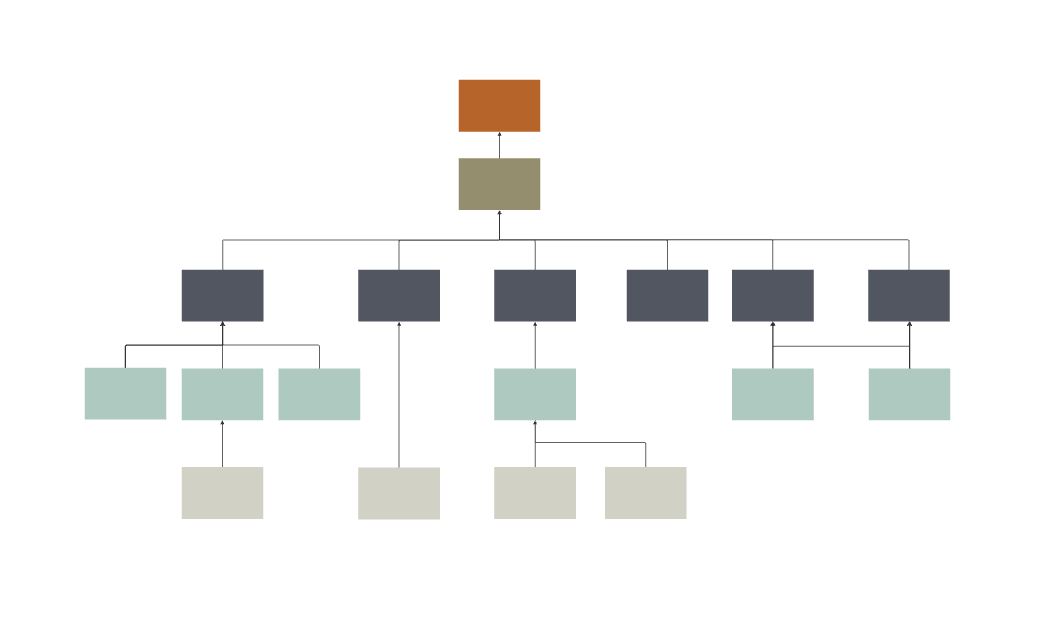
When most people think of organizational structure, they picture a chart—a visual representation of positions and reporting lines. While this is an important aspect, it barely scratches the surface of what organizational structure truly encompasses. A well-designed structure is the backbone of an organization, aligning people, processes, and systems to the company’s goals. It ensures that resources are allocated effectively, communication flows seamlessly, and teams collaborate to deliver results.
One of the most important aspects of organizational structure—and often the most overlooked—is its role in aligning the business to its strategy.
1. Alignment to Strategy
An organization’s structure must reflect and support its strategic priorities. Whether the goal is growth, operational efficiency, innovation, or customer satisfaction, the structure serves as the vehicle to achieve these outcomes.
For example, consider a mid-sized manufacturing company that recognizes it needs to increase its focus on sales. Previously, the business was structured around its technical and operational expertise, with leadership heavily involved in managing production and engineering teams. While this worked in the past, stagnant revenue revealed a critical gap: insufficient focus on business development and customer engagement.
To realign with its strategy of driving sales growth, the organization adjusted its structure in several ways:
- Dedicated Sales Leadership: A new Sales Director role was created to oversee sales strategy, forecasting, and execution.
- Customer-Focused Teams: A sales support function was introduced to streamline customer onboarding and follow-ups, freeing sales staff to focus on closing deals.
- Clear Reporting Lines: Sales now reported directly to the CEO, signaling its priority in the company’s strategy.
This realignment didn’t just shift positions on an org chart—it fundamentally changed how resources, authority, and responsibilities were distributed across the business. Teams became more customer-oriented, and decision-making sped up in areas tied to revenue growth.
The lesson here? Structure is not static; it must evolve as the organization’s strategy shifts.
2. Roles and Responsibilities
An effective structure clarifies who does what and how responsibilities align to organizational goals. This goes beyond job titles to ensure:
- No critical tasks are overlooked.
- Role duplication is minimized.
- Employees understand their purpose and accountability.
In the sales-focused example above, introducing new roles like Sales Director and support teams ensured clear ownership of revenue-generating activities. Additionally, updating job descriptions helped eliminate role confusion, particularly in leadership positions where priorities had been fragmented.
Clearly defined roles empower employees to focus on their core contributions and enable leadership to measure performance against specific outcomes.
3. Decision-Making Authority
Organizational structure determines where decision-making authority lies—who has the power to make what decisions and how these decisions flow through the organization. Misaligned decision-making can lead to bottlenecks, missed opportunities, and inefficiencies.
In companies experiencing sales challenges, decision-making often resides too high in the organization, delaying responses to market opportunities. For example:
- Sales teams may need quicker approval for discounts or proposals.
- Customer complaints or requests may get stuck in layers of approvals.
By redefining reporting structures and empowering frontline staff with clear decision-making authority, organizations can respond faster to customer needs and market changes. A decentralized approach, where authority is pushed closer to those doing the work, often leads to greater agility and customer satisfaction.
4. Communication Flow
How information flows across an organization is a direct outcome of its structure. Formal channels (like meetings and reports) and informal dynamics (like interdepartmental relationships) determine whether teams can collaborate effectively.
A structure that lacks communication clarity can lead to:
- Misaligned priorities across departments.
- Duplication of efforts.
- Critical information not reaching decision-makers.
For instance, in a company shifting its focus to sales, the production, finance, and marketing teams must stay aligned with the sales team’s forecasts and priorities. A cross-functional communication process—such as regular interdepartmental meetings or shared dashboards—can ensure all teams are working toward the same goals.
5. Processes and Accountability Systems
Processes and systems embedded within an organizational structure define how work gets done. They include:
- Standard Operating Procedures (SOPs).
- Performance management systems (KPIs, dashboards).
- Mechanisms for holding teams accountable.
In the earlier example of increasing sales focus, the organization introduced key performance indicators (KPIs) for sales targets, customer acquisition, and revenue growth. These metrics were reported regularly through new dashboards, allowing leadership to monitor progress and hold teams accountable.
Accountability systems ensure that improvements aren’t just theoretical—they drive measurable results.
6. Culture and Collaboration
The structure of an organization shapes its culture and collaboration dynamics. Hierarchical structures may promote stability and control but can stifle innovation and teamwork. Conversely, flatter structures encourage collaboration but may lack role clarity.
An organization shifting to a sales-driven culture may need to break down silos between departments. For example:
- Marketing and sales teams can collaborate on lead generation strategies.
- Production teams can work closely with sales to ensure customer needs are met efficiently.
A collaborative structure fosters alignment across teams and encourages a culture of shared responsibility.
7. Resource Allocation
Resource allocation within a structure determines how people, time, and tools are distributed. Misaligned structures can lead to:
- Overburdened teams.
- Underutilized resources.
- Misprioritization of time.
In the case of increasing sales focus, resources—including personnel and technology—were reallocated to support revenue growth. This included:
- Hiring sales staff and support personnel.
- Investing in CRM tools to streamline customer management.
- Reallocating leadership attention to business development priorities.
Strategic resource allocation ensures that critical initiatives have the capacity and tools needed for success.
8. Employee Development and Leadership
Organizational structure also defines pathways for employee development and leadership growth. Without a structure that supports talent development, companies risk stagnation and turnover.
For example, as the sales team in our case study expanded, the organization implemented:
- A training and development plan for sales staff.
- Leadership coaching for the new Sales Director.
This not only equipped employees with the skills to succeed but also ensured continuity in leadership as the business grew.
Organizational structure is far more than an org chart; it’s the framework that aligns a company’s people, processes, and systems with its strategic goals. When a business recognizes a need—such as increasing its focus on sales—it must re-evaluate its structure to ensure that resources, authority, and accountability are aligned with this objective.
By focusing on strategy alignment, role clarity, decision-making authority, communication flow, and employee development, companies can build structures that drive efficiency, agility, and growth. Whether the challenge is sales stagnation, operational inefficiency, or leadership gaps, the right structure is the foundation for transformation and success.
Take the Next Step
Is your organization’s structure aligned with your strategic goals? If you’re facing challenges like stagnant sales, operational inefficiencies, or unclear responsibilities, it may be time to revisit your framework. Contact Leadershyft today to explore how we can create a structure that drives efficiency, accountability, and growth for your business.

